
20 Foods That Cause and Relieve Constipation in Babies
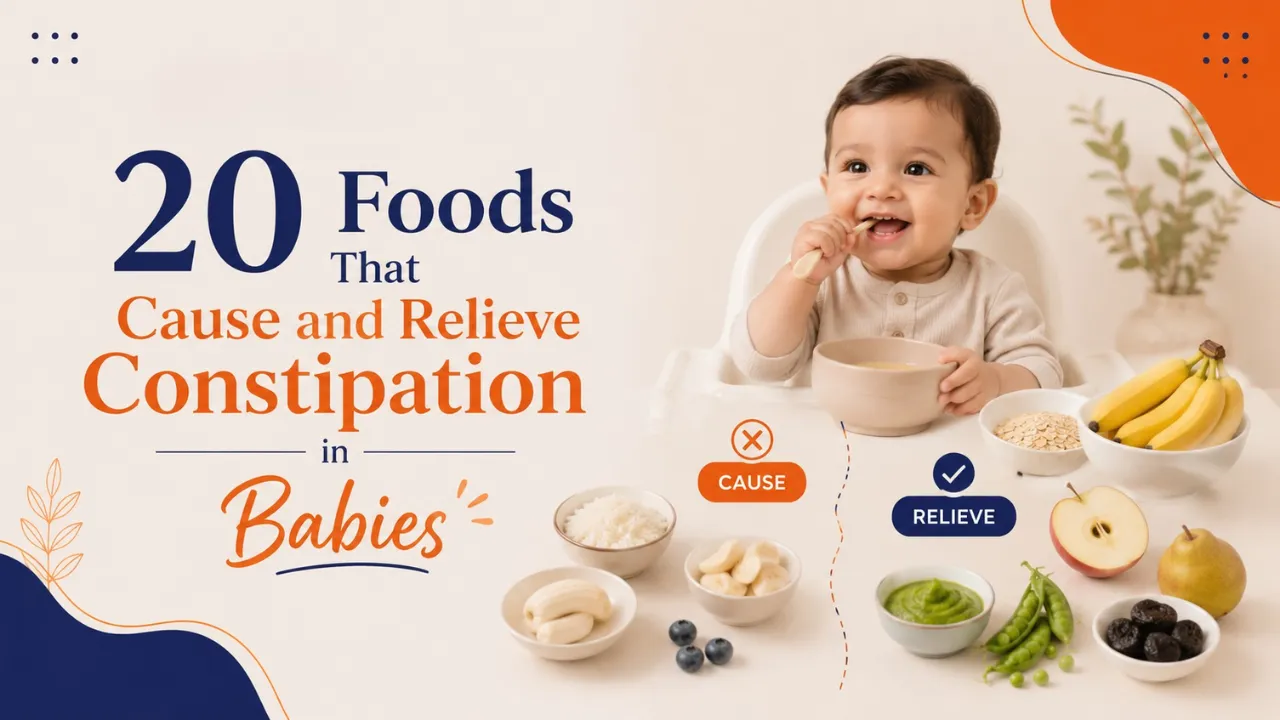
Constipation is a common concern when babies start eating solid foods. While occasional constipation is normal, the right food choices can make a big difference in your baby's digestive comfort. This guide explains 20 common foods, 10 that may contribute to constipation and 10 that may help relieve it, along with practical feeding tips for parents. Always consult your pediatrician if constipation is persistent or severe.
20 Foods That Cause and Relieve Constipation in Babies
Constipation is common when babies begin solids. This parent-friendly guide explains which foods may make stools harder and which age-appropriate foods may support smoother digestion.
When babies start eating solid foods, parents often notice changes in their bowel movements. Some babies pass stool daily, while some may go longer without discomfort. What matters most is the texture and comfort of the stool, not only the number of times.
Constipation usually means stools are hard, dry, difficult to pass or painful for the baby. Food choices, fluid intake, age, activity and routine can all affect digestion. This guide explains foods that may cause constipation and foods that may help relieve it, while reminding parents to consult a pediatrician when symptoms are severe or persistent.
"Every baby's digestion is different. Gentle food choices and patience often work better than sudden changes."
What Does Constipation Look Like in Babies?
Constipation does not always mean the baby is not passing stool every day. Some babies naturally have different bowel patterns. Parents should look for signs of discomfort and stool texture.
Common Signs to Watch
- Hard stools: Stool may look dry, firm or pebble-like.
- Straining: Baby may cry or look uncomfortable while passing stool.
- Bloated tummy: The stomach may feel tight or uncomfortable.
- Low appetite: Some babies may feed less when constipated.
10 Foods That May Cause Constipation in Babies
These foods do not cause constipation in every baby. However, some babies may experience harder stools if they eat these foods in large amounts or without enough fluids and fiber balance.
Do not remove foods suddenly
If you feel a food is causing constipation, reduce it slowly and speak to your pediatrician if the issue continues.
1. White Rice
White rice is commonly introduced to babies, but it is lower in fiber compared to whole grains. In some babies, frequent rice-based meals may make stools firmer.
2. Unripe Banana
Bananas can affect babies differently. Unripe or green bananas may be more binding and may contribute to constipation in some babies.
3. Cheese
Cheese is low in fiber and may slow digestion when given in large amounts. If your baby is already constipated, keep portions small and balanced with fiber-rich foods.
4. White Bread
Refined white bread contains less fiber than whole-grain options. Too much refined bread may contribute to harder stools in some children.
5. Crackers
Many packaged crackers are refined and low in fiber. They may fill the baby quickly without supporting smooth digestion.
6. Refined Cereals
Some refined cereals may be low in fiber. If your baby eats cereal often, ask your pediatrician about age-appropriate higher-fiber alternatives.
7. Excess Dairy
Dairy products may contribute to constipation in some babies and toddlers when consumed in large quantities. Do not stop dairy completely without medical advice.
8. Fried Foods
Fried foods are not ideal for babies. They are usually low in fiber and heavy to digest, which may affect bowel comfort.
9. Processed Snacks
Packaged snacks are often low in fiber and high in salt or sugar. These should be limited in a baby's diet.
10. Sugary Foods
Sweet packaged foods give little nutrition and almost no fiber. They may reduce the baby's interest in healthier foods that support digestion.
Balance with
- Soft fruits
- Cooked vegetables
- Age-appropriate fluids
- Gentle movement
Limit during constipation
- Too much cheese
- Refined snacks
- Fried foods
- Low-fiber meals
10 Foods That May Help Relieve Constipation
Fiber-rich foods and proper hydration can help support smoother digestion when introduced according to your baby's age and readiness. Always introduce new foods slowly and watch your baby's response.
Gentle Digestion Support
- Start small: Introduce one new food at a time.
- Keep texture safe: Mash, puree or soften foods according to age.
- Offer fluids as advised: Hydration supports fiber-rich foods.
- Watch the baby: Every baby's digestion responds differently.
11. Prunes
Prunes are one of the most common foods used to support bowel movements. Prune puree may help some babies when introduced in an age-appropriate way.
12. Pears
Pears contain water and fiber, making them a gentle fruit option for babies dealing with hard stools.
13. Cooked Apples
Cooked or pureed apples can provide gentle fiber. The texture should be soft and suitable for your baby's feeding stage.
14. Papaya
Papaya is soft, naturally sweet and often easy to digest. It can be mashed well for babies who are ready for fruit.
15. Sweet Potato
Sweet potato is nutritious, soft when cooked and contains fiber. It can be mashed or pureed for babies.
16. Oats
Oats provide soluble fiber and can be a gentle breakfast option when prepared in a soft, baby-friendly texture.
17. Peas
Cooked and mashed peas add fiber and nutrients to the baby's meals. Make sure they are soft and properly mashed.
18. Broccoli
Broccoli contains fiber and vitamins. Cook it until very soft and serve it in a texture that is safe for your baby's age.
19. Pumpkin
Pumpkin is soft, mild and easy to include in baby meals. It can support balanced digestion when served cooked and mashed.
20. Age-Appropriate Water and Fluids
For babies who are developmentally ready, appropriate fluid intake can support digestion along with fiber-rich foods. Follow your pediatrician's advice for water or fluids based on your baby's age.
"Fiber works best when it is supported by enough fluids and a balanced feeding routine."
When Should Parents Call a Doctor?
Occasional constipation may improve with gentle food changes, but some signs need medical attention. Do not wait too long if your baby seems uncomfortable or unwell.
Seek help if symptoms look serious
Contact your pediatrician if constipation lasts several days, stool has blood, baby has vomiting, severe pain, poor feeding, fever or unusual tiredness.
Simple Feeding Tips to Prevent Constipation
Constipation prevention is usually about balance. Avoid giving only one type of food repeatedly and try to include age-appropriate fruits, vegetables, grains and fluids.
Baby-Friendly Constipation Checklist
- Introduce solids gradually: Give the digestive system time to adjust.
- Offer variety: Rotate fruits, vegetables and grains.
- Limit processed foods: Choose fresh homemade meals when possible.
- Track reactions: Notice which foods suit your baby best.