6 Month Old Baby Food Ideas: What to Feed & How to Start
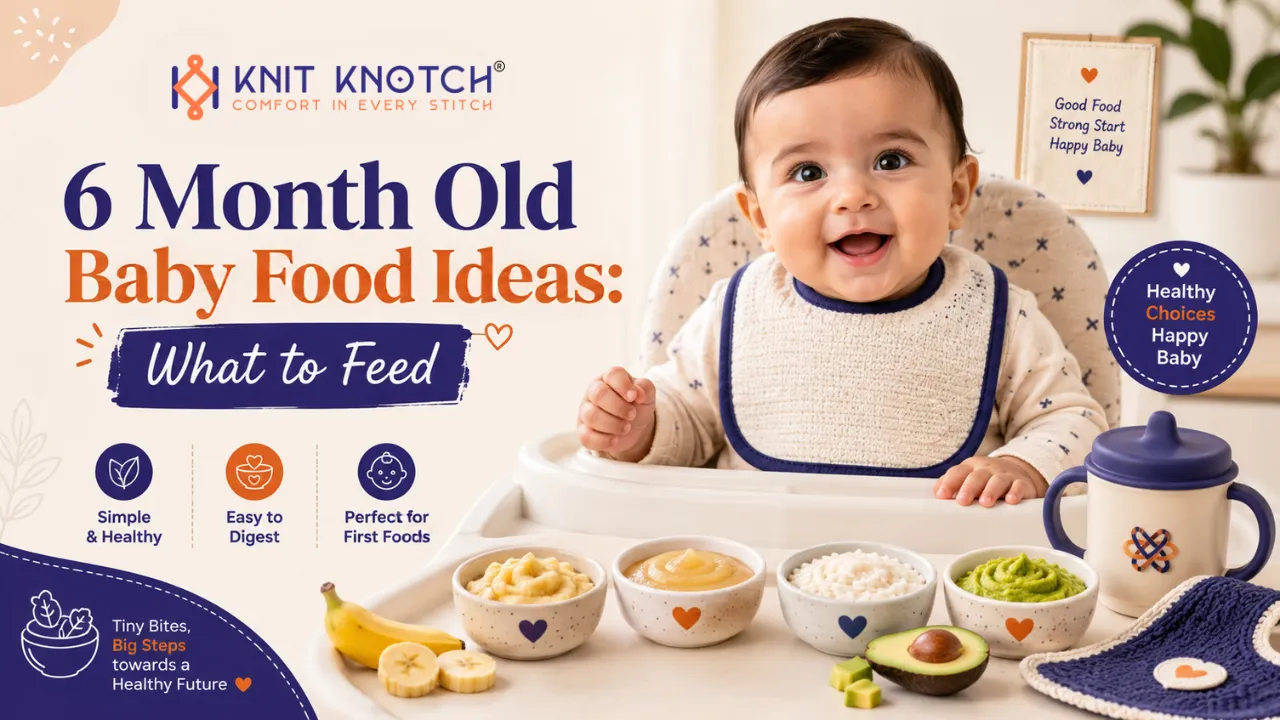
6 Month Old Baby Food Ideas: What to Feed & How to Start Ready to start solids? Discover easy 6 month old baby food ideas for Indian parents — banana, ragi porridge, sweet potato, moong dal and more — plus a simple weekly plan, foods to avoid, and how to read your baby's readiness signs.
6 Month Old Baby Food Ideas: What to Feed & How to Start
The six-month mark is exciting and a little nerve-racking. Your baby is ready for their first taste of real food, and you want to get it right. Here's a calm, practical guide to starting solids in an Indian kitchen.
01 Is your baby ready?
Most babies are ready to start solids around six months, but the calendar is a guideline, not a switch. What matters more is whether your baby shows the readiness signs, and some hit them a little before or after the six-month mark. The World Health Organization recommends exclusive breastfeeding for the first six months, with solids introduced alongside continued breastfeeding from around that point.
Readiness signs to look for
- Holds their head up steadily and sits with minimal support.
- Shows interest in food when they watch you eat, reaching or leaning forward.
- Opens their mouth when food approaches.
- The tongue-thrust reflex has faded so they can move food to the back of the mouth and swallow rather than pushing it out.
- Seems unsatisfied after a full milk feed, wanting more.
If you're unsure whether your baby is ready, check with your paediatrician. There's no prize for starting early, and waiting a few weeks until the signs are clear does no harm at all.
02 The golden rules of starting solids
Before the food ideas, a few principles that make the whole process smoother and safer.
One new food at a time, with three to four days between introductions. This lets you spot any reaction clearly. Start thin and smooth, and thicken the texture gradually as your baby gets used to swallowing. Milk stays the main food at this age; solids are a complement, not a replacement.
03 Easy first foods for an Indian kitchen
You don't need imported superfoods or expensive store-bought purees. The best first foods are simple, single-ingredient, and probably already in your kitchen.
Fruits
Mashed banana is the classic first food for a reason: it's naturally sweet, soft, and needs no cooking. Steamed and mashed apple (without the peel) is another gentle starter. Mashed papaya, chikoo and ripe mango (in season) are all naturally sweet and easy to digest. Introduce one at a time and watch for any reaction.
Vegetables
Sweet potato, carrot, pumpkin (kaddu) and lauki (bottle gourd) are mild, naturally sweet and easy to cook into a smooth puree. Steam or boil until very soft, mash well, and thin with a little breast milk or cooled boiled water if needed. Starting with vegetables alongside fruits, rather than only fruits, helps your baby accept savoury flavours early.
Grains and cereals
Ragi (finger millet) porridge is a traditional Indian first food and a great one. It's rich in calcium and iron, easy to digest, and mild in taste. Rice cereal made from ground rice, cooked thin, is another gentle starter. Suji (semolina) porridge works too once your baby is comfortable with the first couple of foods. Cook all grains very smooth and thin to start.
Lentils and dal
Plain moong dal water (the strained liquid from boiled yellow moong) is a time-honoured Indian first food, and for good reason: it's protein-rich, gentle and familiar. After a few days you can start offering the mashed dal itself, thinned to a smooth consistency. Masoor dal is another mild option.
"Your kitchen already has the best first foods. A ripe banana, a boiled sweet potato, a cup of moong dal water. You don't need a single fancy product."
04 A simple starter plan
This is a rough guide for the first few weeks, not a rigid schedule. Let your baby set the pace, and don't worry about quantities. A few spoonfuls is a great start.
| Week | Foods to try | How much |
|---|---|---|
| Week 1 | Mashed banana OR rice cereal (one food, 3-4 days) | 1-2 teaspoons, once a day |
| Week 2 | Add a vegetable: sweet potato or carrot puree | 2-3 teaspoons, once a day |
| Week 3 | Add ragi porridge or moong dal water | A few teaspoons, once a day |
| Week 4 | Add a second fruit: apple or papaya puree | Building to a small bowl, 1-2 times a day |
By the end of the first month you'll have introduced four or five single foods and your baby will be getting used to the spoon, the textures, and the idea that food is something to enjoy. That alone is a big win.
05 Foods to avoid at 6 months
A few things are genuinely off-limits at this stage, and a few more are better left for later.
Do not give at 6 months:
- Honey until after 12 months (risk of infant botulism)
- Whole nuts, seeds and large chunks (choking hazard)
- Added salt or sugar in any food
- Cow's milk as a main drink before 12 months (small amounts in cooking are fine for most babies, but check with your doctor)
- Processed or packaged foods not designed for babies
- Egg whites and citrus fruits are sometimes introduced a little later; follow your paediatrician's guidance
06 Making mealtimes easier
The practical side matters as much as the food itself. A few small habits make the process less stressful for everyone.
Feed when your baby is alert and happy, not when they're tired or very hungry. A baby who's screaming with hunger wants milk, not a new taste experience. Offer solids about 30 to 45 minutes after a milk feed so they're interested but not desperate.
Use a soft, small spoon and let the baby set the pace. If they turn away, close their mouth, or lose interest, stop. There's no quota to hit. Forcing feeds at this stage creates the wrong association with food, and the volume genuinely doesn't matter yet.
Prepare for the mess. It's unavoidable, and it's actually a good sign. A baby exploring texture with their hands and face is learning about food, not misbehaving. Dress them in something easy to wash or a bib that catches the fallout. Soft cotton that handles frequent washing is ideal for the weaning phase; if you're choosing everyday clothes for this stage, our guide on removing stains from kids' clothes will save you a few favourites. And for fabrics kind to a baby's skin, the sensitive skin fabric guide is worth a look.
Breast milk or formula remains the primary source of nutrition through the first year. Solids at six months are about introducing tastes and textures, not replacing milk feeds. Keep breastfeeding or formula alongside solids. For reliable, detailed guidance on infant nutrition, the National Health Portal of India is a good official resource.
07 When to talk to your doctor
Starting solids is usually smooth, but a few things are worth flagging with your paediatrician: persistent refusal of solids over several weeks, any sign of an allergic reaction (rash, swelling, vomiting, breathing changes) after a new food, ongoing digestive upset, or concerns about weight gain. Our guide on stomach ache in babies covers the tummy-trouble signs to watch for during this transition.
This article is general parenting information, not medical or nutritional advice. KnitKnotch is a children's clothing brand, not a medical provider. Every baby is different. For guidance on your baby's diet, allergies, or development, please consult a qualified paediatrician.
Frequently asked questions
Dressed for the mess
The weaning phase is beautiful and messy in equal measure. KnitKnotch makes soft, washable cotton co-ord sets and everyday wear for babies and toddlers — easy to clean, gentle on the skin, and ready for every puree-covered mealtime. Most of it under Rs599.
Shop Baby & Toddler Wear