
9 Kidswear Rules We Happily Ignore in 2026
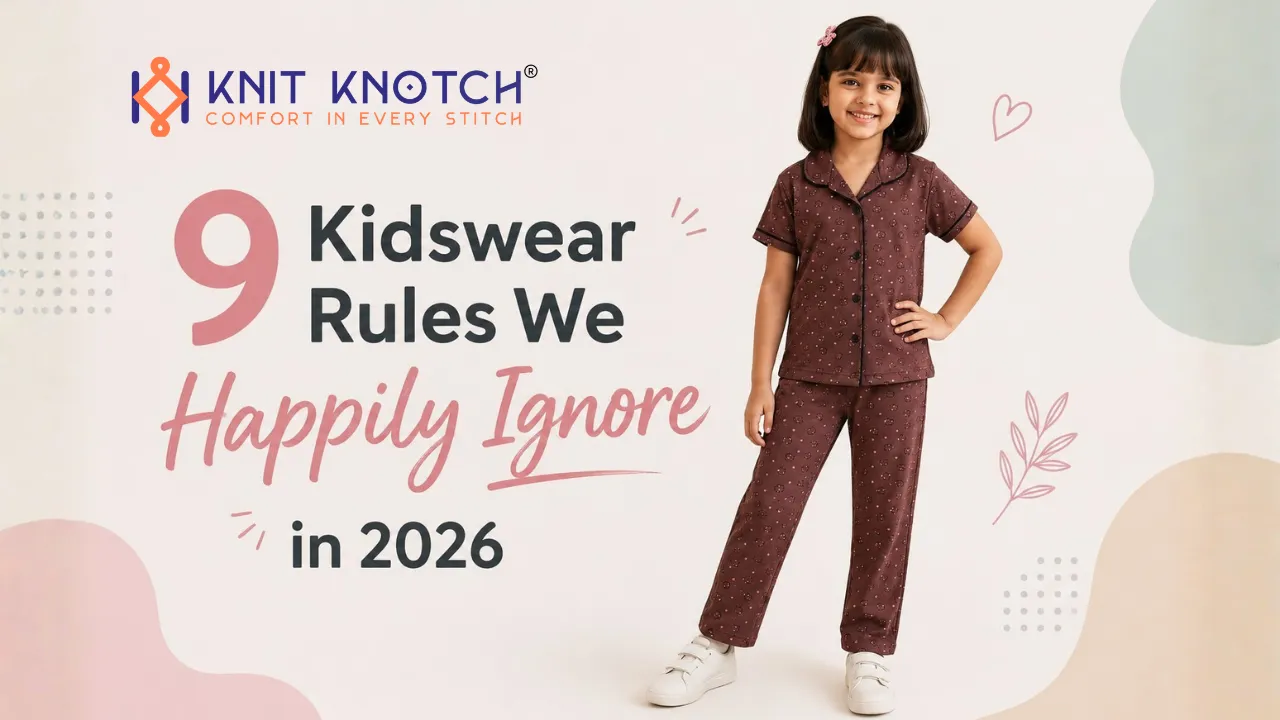
Kids do not live on fashion mood boards. They run, sit cross-legged, spill snacks, repeat favourite outfits and suddenly decide that one T-shirt is the only T-shirt worth wearing. So why should their wardrobes follow rules designed for perfect photographs?
9 Kidswear Rules We Happily Ignore in 2026
Because the best kidswear is not about following every fashion rule. It is about comfort, movement, personality and clothes that make everyday life easier.
01Rule: Boys Wear Blue, Girls Wear Pink
We happily ignore it. Kids can wear the colours they enjoy. Sage, orange, lavender, navy, rust, pink, green and yellow do not need a gender label.
02Rule: Matching Sets Are Only for Going Out
A matching set can be one of the easiest everyday outfits. There is no need to save a comfortable co-ord for a special plan. A coordinated top and bottom can simplify busy mornings while still looking put together.
Better yet, separate the pieces. Wear the co-ord top with a neutral lower tomorrow, then pair the matching bottom with a graphic tee later in the week.
03Rule: Kids Should Always Look “Dressed Up”
Looking polished should not mean stiff collars, restrictive waistbands or clothes that need constant adjusting. For active children, movement matters.
“If an outfit looks great but your child cannot play comfortably in it, it is not doing its job.”
04Rule: Never Repeat an Outfit Too Soon
We vote for outfit repeating. If a child loves a set, it fits comfortably and it survives regular washing, wearing it again is a success—not a styling failure.
05Rule: Every Top Needs a “Perfect” Matching Bottom
Children's wardrobes become easier when pieces are allowed to mix. A printed T-shirt can work with navy lowers, shorts or cargos. A comfortable plain bottom can support several bright tops.
06Rule: Trendy Means Complicated
Some of the strongest kids fashion directions are surprisingly simple: co-ord sets, relaxed bottoms, bold prints, pastels and breathable everyday fabrics.
07Rule: Bigger Is Always Better for Growing Kids
Buying slightly roomy clothing can extend wear, but “roomy” and “too large” are different. Choose the intended fit using the garment's size chart and your child's measurements.
08Rule: Kids Need a Huge Wardrobe
More clothes do not automatically create more useful outfits. A smaller wardrobe can work beautifully when the pieces coordinate.
| Instead of buying... | Try... | Why it works |
|---|---|---|
| Many one-look outfits | Mix-and-match co-ords | Top and bottom can work separately |
| Several difficult colours | Coordinating base shades | More combinations |
| Occasion-only pieces | Versatile everyday styles | Higher repeat wear |
| Trend-only items | Comfort basics + one playful trend | Balances style and practicality |
09Rule: Parents Should Choose Every Outfit
Children can have opinions about colour, prints and what feels comfortable. Giving age-appropriate choices can make getting dressed simpler while helping them develop personal style.
What Kidswear Rules Do We Actually Keep?
Check the product's actual fabric composition instead of relying on vague marketing language. Choose age-appropriate fits, comfortable waistbands and construction that suits the child's activity. Follow wash-care instructions and inspect embellishments or loose components on younger children's clothing.
- Can my child move comfortably in it?
- Will they willingly wear it again?
- Can it work with pieces already in the wardrobe?
- Is the care routine realistic for our family?
- Does the size and construction suit the child's age and activity?
Explore the KnitKnotch Way
Start with easy pieces such as boys' co-ord sets, girls' co-ord sets and toddler co-ord sets. Choose according to the individual product's fabric details, measurements, fit and care instructions.
FAQs: Kidswear Rules & Everyday Styling
What are the most outdated kidswear rules?
Strict colour-by-gender rules, avoiding outfit repeats, saving matching sets only for outings and prioritising a dressed-up look over comfort are all worth reconsidering.
What matters most when choosing everyday kidswear?
Comfortable fabric, age-appropriate fit, freedom of movement, practical wash care and repeat-wear potential.
Are co-ord sets practical for kids?
Yes. They simplify outfit planning, and many sets become more versatile when the top and bottom are mixed with other pieces.
Can boys and girls wear the same colours?
Yes. Choose colours based on the child's preferences and how well they work with the rest of the wardrobe.
Is repeating kids outfits a good idea?
Yes. Repeating favourite, comfortable clothes can improve cost per wear and reduce unnecessary wardrobe purchases.
Childhood First. Fashion Rules Second.
Choose clothes that are comfortable enough for play, versatile enough for repeat wear and fun enough for kids to make their own.
Explore KnitKnotch ?