Comfortable Clothes for Active Kids
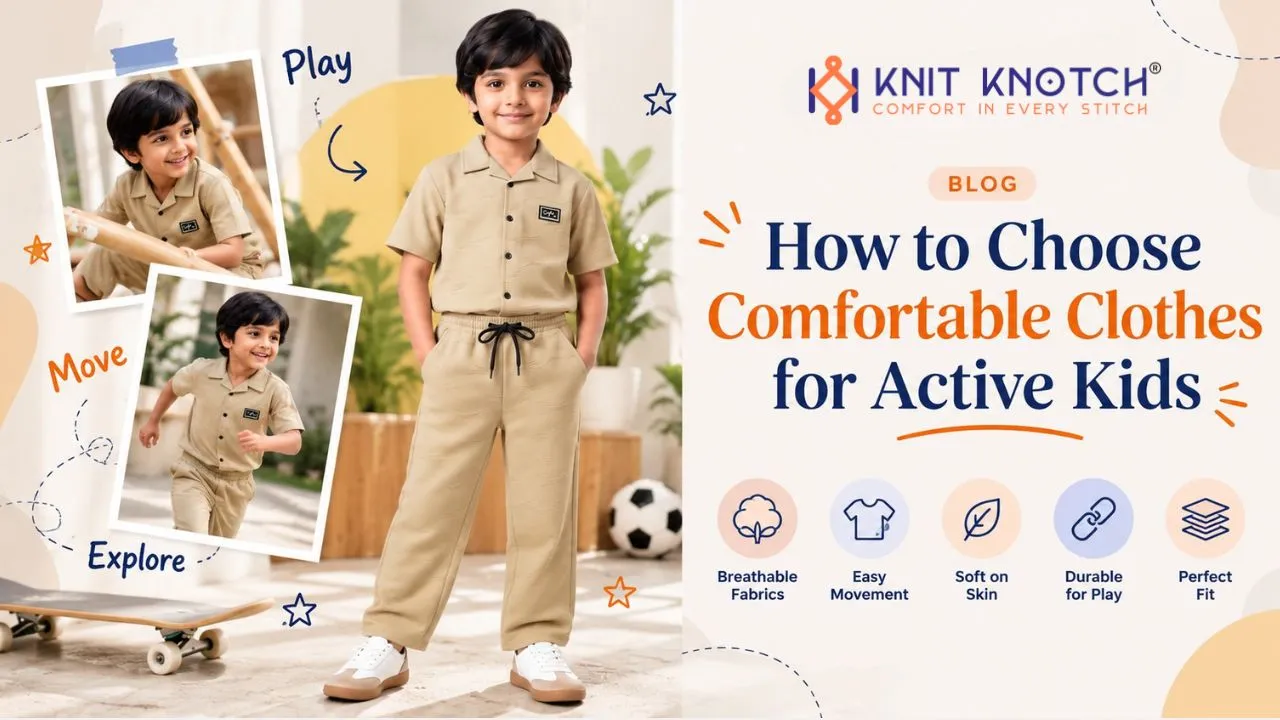
The best clothes for active kids are lightweight, breathable, easy to move in and comfortable at the waist, neck and seams. Soft cotton-rich fabrics, relaxed fits, flexible bottoms and simple designs usually work well for everyday play.
How to Choose Comfortable Clothes for Active Kids
A practical parent-friendly guide to choosing soft, breathable and movement-friendly clothes for kids who love to run, jump, climb and play.
Active kids rarely stay still for long. One minute they are sitting on the floor, the next they are running, climbing, cycling or turning the sofa into an obstacle course. Their clothes need to keep up without feeling tight, heavy or distracting.
So when parents search for comfortable clothes for active kids, style is only part of the answer. Fabric, fit, movement, waistbands, seams and even how easily an outfit can be washed all matter. Here is a simple way to choose everyday kidswear that looks good and feels easy to wear.
01Start With Soft, Breathable Fabric
For everyday play, choose fabric that feels comfortable against the skin and does not feel unnecessarily heavy. Cotton and cotton-rich fabrics are popular choices for casual kidswear because they can feel soft and breathable during regular daily activities.
02Choose a Fit That Allows Easy Movement
Comfortable clothing should let children lift their arms, bend their knees, sit cross-legged, squat and run without constantly pulling the garment back into place. Avoid choosing everyday play clothes only because they look fitted or structured in a photo.
A good active-kid fit is neither excessively tight nor so oversized that extra fabric gets in the way. Look for enough room through the shoulders, hips and knees for natural movement.
03Pay Attention to the Waistband
The waistband can decide whether a child happily wears an outfit all day or wants to change after twenty minutes. For joggers, shorts and lowers, look for a flexible elastic waistband that sits comfortably without digging into the tummy.
Adjustable drawstrings can be useful, but they should be practical and appropriate for the child's age. The goal is a secure fit without unnecessary pressure.
04Check Stretch Where Kids Need It Most
Children move differently from adults. They squat to pick up toys, crawl under tables, sit on the floor and suddenly sprint across the playground. Clothes should accommodate that range of movement.
| Area | What to Check | Why It Matters |
|---|---|---|
| Shoulders | Arms can lift comfortably | Useful for climbing, throwing and reaching |
| Waist | Flexible and not restrictive | More comfortable while sitting and bending |
| Hips | Enough room to move | Helps during running and floor play |
| Knees | Easy to bend | Important for squatting, cycling and climbing |
05Avoid Unnecessary Bulk for Everyday Play
Heavy embellishments, stiff decorative panels, oversized accessories and bulky layers may look festive, but they are not always ideal for active everyday use. For school runs, playdates, travel and park time, simpler clothing can be easier for children to manage.
06Look at Seams, Labels and Inside Finishing
Parents naturally focus on the outside of an outfit, but comfort is often decided on the inside. Check whether seams feel bulky, labels feel stiff or decorative elements have rough backing that touches the skin.
For children who are particularly sensitive to texture, smoother inside finishing and fewer irritating details can make everyday dressing easier.
07Choose Clothes That Are Easy to Put On
Active kids often want to get dressed quickly and get back to playing. Easy neck openings, elasticated bottoms and uncomplicated silhouettes can make dressing simpler, especially as children start learning to dress themselves.
For everyday use, a comfortable T-shirt with joggers, shorts or a matching kids co-ord set can reduce the morning mix-and-match struggle while keeping movement easy.
08Think About the Activity
There is no single outfit that is perfect for every situation. Match the clothing to what your child will actually be doing.
| Activity | Comfortable Clothing Idea |
|---|---|
| Indoor play | Soft T-shirt with relaxed shorts or lowers |
| Park / playground | Breathable tee with flexible joggers or shorts |
| Travel | Soft co-ord set with an easy extra layer if needed |
| Playdate | Comfortable matching set that still looks put-together |
| Cool weather | Breathable base layer plus a removable sweatshirt or light layer |
09Do the 5-Movement Test Before Keeping the Outfit
Once your child tries the outfit, do not judge the fit only while they are standing still. Ask them to perform five simple movements:
10Prioritise Easy-Care Clothes
Active-kid clothing will face food spills, playground dust, paint, sweat and frequent washing. Everyday outfits should therefore be practical for the family's normal laundry routine.
Before buying, read the care label. A beautiful outfit that needs complicated maintenance may end up spending more time in the cupboard than on the child.
11Let Your Child's Comfort Give You the Final Answer
Parents can check fabric, stitching and fit, but children often give the clearest feedback. If your child keeps choosing the same soft joggers, T-shirt or co-ord set, there is usually a reason: it feels easy to wear.
Watch for signs such as pulling at the collar, scratching at seams, constantly adjusting the waistband or refusing certain fabrics. Clothing preferences can help you understand what feels most comfortable to your child.
Comfortable Clothes for Active Kids: Quick Buying Checklist
| Check | Look For |
|---|---|
| Fabric | Soft, breathable and suitable for the weather |
| Fit | Relaxed enough for natural movement |
| Waist | Flexible elastic without excessive pressure |
| Inside finish | No obviously rough seams, labels or backing |
| Movement | Easy bending, reaching, sitting and running |
| Design | Minimal unnecessary bulk for active play |
| Care | Practical for frequent washing |
What Are the Best Everyday Outfits for Active Kids?
For most active days, simple combinations work best: cotton-rich T-shirts, comfortable shorts, joggers, track pants and matching co-ord sets. In cooler weather, add a removable sweatshirt or light layer rather than relying on one very bulky garment.
The best choice ultimately depends on the weather, activity and your child's individual comfort. The goal is not to make kids look less stylish—it is to choose style that does not get in the way of childhood.
Frequently Asked Questions
What type of clothes are most comfortable for active kids?
Soft, breathable and movement-friendly clothes are usually the easiest for active children. Look for relaxed T-shirts, flexible joggers, shorts and co-ord sets with comfortable waistbands and simple construction.
Is cotton good for active kids?
Cotton and cotton-rich fabrics are popular for everyday kidswear because they can feel soft and breathable. The best fabric still depends on the weather, activity level and the child's individual comfort.
Should kids' clothes be loose or fitted?
For active play, clothes should provide enough room for natural movement without being excessively loose. A comfortable fit should allow easy reaching, bending, sitting, squatting and running.
Are co-ord sets comfortable for kids?
They can be. A co-ord set made with a soft fabric, comfortable waistband and movement-friendly fit can be a practical everyday option because the top and bottom are already coordinated.
How can I check if my child's outfit is comfortable?
Use a simple movement test: ask your child to raise their arms, sit, bend, squat and move around. Also check whether they pull at the collar, waistband, seams or labels while wearing it.
Comfort Made for Non-Stop Kids
Running, playing, exploring or simply being themselves—kids need clothes that move with them. Explore comfortable everyday styles designed for little adventures.
Shop Boys Shop Girls Shop Toddlers