
How to Dress Your Baby for Every Season in India
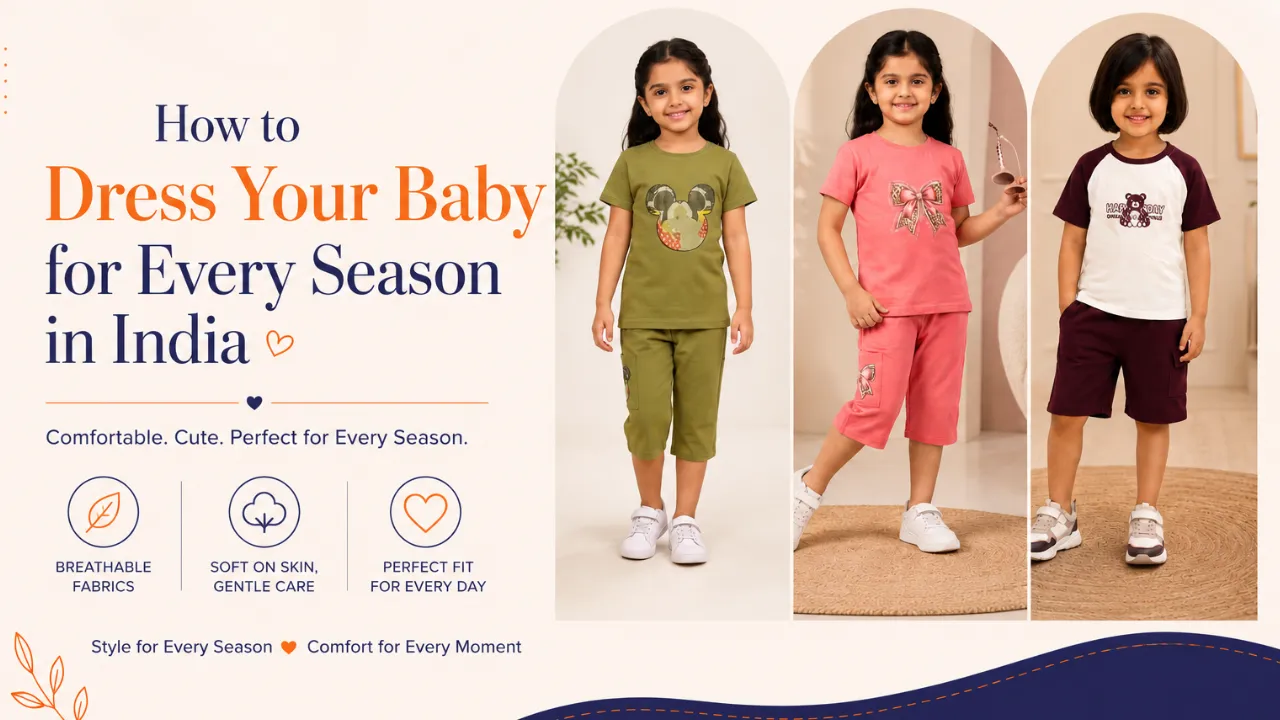
Not sure how to dress your baby through Indian summers, monsoons and winters? Learn the simple one-layer rule, the best cotton choices for each season, day-vs-night dressing, and easy sizing tips, so your little one stays comfortable all year round.
How to Dress Your Baby for Every Season in India
From peak summer to a cold-snap winter morning, dressing a baby comes down to one simple rule and a few good fabric choices. Here's the season-by-season version for Indian weather.
01 The one rule that covers everything
If you remember nothing else, remember this: a baby needs about one light layer more than you're comfortable wearing in the same room. Not three, not a blanket "just in case" — one. Babies overheat far more easily than they get cold, and overheating carries real risks, so the instinct to bundle them up usually does more harm than good.
To check whether you've got it right, feel the back of the neck or the chest — not the hands and feet, which naturally run cool. Warm and dry means you've nailed it. Sweaty or flushed means strip a layer; cold chest means add one.
Hands and feet feeling cool is normal and not a reason to add layers. Always judge temperature by the chest or back of the neck instead.
02 The three seasons, at a glance
India really gives you three dressing modes. Here's the short version before we go deeper.
Summer
One loose layer of soft cotton. Short sleeves, airy fits, minimal coverage.
Monsoon
Light, quick-drying cotton. Keep a dry spare set handy at all times.
Winter
Layer up with cotton underneath and a soft warm top. Add and remove as needed.
03 Dressing your baby in summer
Indian summers are about heat plus humidity, and the goal is simply to keep your baby cool and let their skin breathe. Loose, lightweight 100% cotton is the whole answer — it absorbs sweat and lets air move, which helps prevent heat rash and keeps your baby comfortable.
Stick to a single layer indoors: a short-sleeve cotton bodysuit or a light co-ord set is plenty. Skip socks, mittens and caps indoors unless the AC is running cold. The less fabric trapping heat, the better.
"In an Indian summer, less is more. A single layer of breathable cotton beats any number of cute layers your baby will only sweat through."
04 Dressing for the monsoon
The rains bring damp, sticky air, and the real enemy is moisture sitting against the skin. Choose light cotton that dries quickly, and change your baby promptly the moment an outfit gets damp — from rain, sweat or a feed. Trapped moisture is what leads to rashes and fungal irritation in skin folds.
Always keep a dry spare set within reach when you're out. Avoid thick or tightly woven fabrics that stay wet for hours; they're the opposite of what monsoon skin needs.
05 Dressing your baby in winter
North Indian winters can get genuinely cold, while much of the south stays mild — so winter dressing is all about layering rather than one heavy garment. Start with a soft cotton base layer (a long-sleeve bodysuit), add a warm top or a light jacket, and you can peel layers off as the day warms up.
Layering beats a single bulky outfit for two reasons: it traps warmth more effectively, and it lets you adjust quickly when you move between a cold morning, a sunny afternoon, and a heated indoor room. For sleep, a warm sleep sack is safer than loose blankets.
Even in winter, overheating is a risk indoors and in the car. Take the outer layer off once you're somewhere warm, and check the chest to make sure your baby hasn't gone from cosy to sweaty.
06 Day vs night dressing
Nighttime is where most parents over-bundle. The safest approach is a single comfortable layer of cotton plus a sleep sack sized for the season — light for summer, warmer for winter. Keep the room comfortable rather than dressing for cold, and skip loose blankets in the crib entirely.
| Season | Daytime | Sleep |
|---|---|---|
| Summer | Short-sleeve cotton bodysuit or light set | Single cotton layer + light sleep sack |
| Monsoon | Quick-dry cotton, dry spare on hand | Dry cotton layer + light sleep sack |
| Winter | Cotton base + warm top, layered | Long-sleeve cotton + warmer sleep sack |
07 A few buying and sizing tips
Whatever the season, a few habits make dressing easier and your money go further.
Smart dressing habits
- Choose cotton first — it works across all three seasons and is gentle on a baby's skin.
- Pick easy openings — envelope necks, front snaps and zip sleepers make changes faster.
- Size up when unsure — a slightly roomy fit lasts longer and is more comfortable to move in.
- Keep a dry spare — especially in summer and monsoon, a backup set saves the day.
- Buy the winners twice — when something fits well and washes well, get a second.
08 Frequently asked questions
Soft cotton for every season
KnitKnotch makes breathable cotton co-ord sets, shorts sets and everyday wear for boys, girls and toddlers — comfortable across Indian summers, monsoons and mild winters, and most of it under Rs500.
Shop the Collection