
How to Remove Food Stains from Clothes: Easy Cleaning Tips Every Parent Should Know
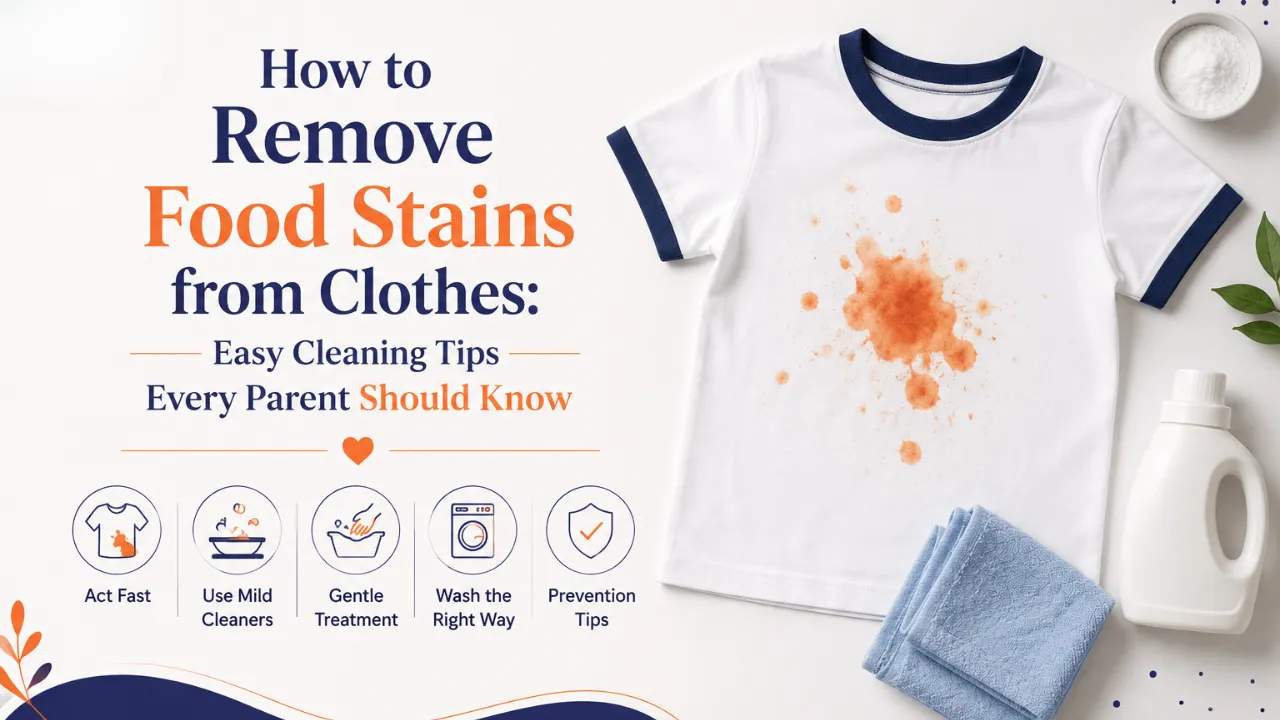
From breakfast spills to lunchtime accidents and messy snack times, food stains are a part of every parent's daily routine. Whether it's ketchup, chocolate, fruit puree, curry, milk, or juice, children's clothes are bound to get stained. The good news is that most food stains can be removed successfully if treated the right way. Knowing how to clean stains properly helps keep your child's favorite outfits looking fresh while protecting the fabric for longer.
How to Remove Food Stains from Clothes
Food spills are part of childhood. This simple guide helps parents clean common food stains from kids' clothes while keeping fabric soft, fresh and comfortable.
From breakfast spills to lunchtime accidents and messy snack breaks, food stains are part of every parent's daily routine. Whether it is ketchup, chocolate, fruit puree, curry, milk, juice or dal, children's clothes often carry proof of a good meal.
The good news is that most food stains can be removed if treated the right way. The key is to act early, avoid harsh scrubbing and follow the garment care instructions carefully.
"Quick action and gentle cleaning usually work better than aggressive scrubbing."
Why Food Stains Need Quick Attention
Food stains can contain oils, proteins, sugar, spices and natural colors. If they stay on the fabric for too long, they may settle deeper into the fibers and become harder to remove.
Before You Start Cleaning
- Remove excess food: Gently lift leftover food from the fabric.
- Do not rub hard: Rubbing may push the stain deeper.
- Use cold water first: This helps loosen many fresh food stains.
- Check the care label: Every garment may need different washing care.
Step 1: Remove Excess Food Carefully
Before washing, gently remove any leftover food from the stained area. You can use a spoon, soft tissue or clean cloth. Avoid spreading the food stain to a larger area.
If the stain is thick, lift it gently instead of rubbing it into the fabric.
Step 2: Rinse with Cold Water
Hold the stained area under cold running water. If possible, rinse from the back of the stain so the food particles move out of the fabric instead of settling deeper.
Start with cold water
Cold water is often safer for fresh food stains. Hot water may set some stains if used too early.
Step 3: Apply Mild Detergent
After rinsing, apply a small amount of mild liquid detergent to the stained area. Gently work it into the fabric using your fingers or a soft cloth.
Let it sit for a few minutes before washing. Avoid using harsh chemicals on kids' clothes unless the garment label allows it.
Step 4: Wash as Per the Care Label
Every fabric has different care needs. Cotton, blends, printed clothes and delicate outfits may all require different washing methods.
Following the care label helps protect fabric softness, color, shape and durability.
"Following the care label is one of the easiest ways to keep kids' clothes looking fresh for longer."
Common Food Stains and How to Handle Them
Not every food stain behaves the same way. Some stains are oily, some are colorful, and some may contain both color and fat.
Food Stain Types
- Milk and curd: Protein-based stains need gentle rinsing and mild detergent.
- Fruit juice: Treat early because color can settle into fabric.
- Chocolate: Remove excess first, then rinse and wash gently.
- Curry and turmeric: These may need extra care because spices can leave strong color.
Food Stain Removal Tips for Cotton Clothes
Cotton is one of the most comfortable fabrics for kids and is usually easier to care for than many delicate fabrics. Still, gentle handling is important.
For Cotton Kidswear
- Treat early: Do not leave stains for several days.
- Use mild detergent: Gentle cleaning helps maintain softness.
- Avoid harsh rubbing: It may damage fabric fibers.
- Dry completely: Store only after the garment is fully dry.
Mistakes Parents Should Avoid
Many food stains become harder to remove because of simple cleaning mistakes. A little patience can protect your child's favorite outfit.
Do
- Remove excess food first
- Rinse with cold water
- Use mild detergent
- Check before drying
Don't
- Rub aggressively
- Use hot water too early
- Ignore care labels
- Dry before stain is gone
How to Protect Kids' Clothes During Meals
While stains cannot be avoided completely, small habits can reduce the damage. Younger babies can wear bibs, and toddlers can be dressed in easy-care cotton clothes during messy meals.
Keep one extra outfit ready
For school, travel or family outings, an extra t-shirt can save the day after a big spill.
Monsoon and Food Stains
During monsoon, clothes take longer to dry. If stained clothes remain damp for too long, they may smell unpleasant. Clean stained garments as soon as practical and dry them fully before folding.
Rainy Season Care
- Do not store damp clothes: Always dry fully before folding.
- Wash stained clothes early: Prevents odor and deeper stains.
- Keep daily outfits ready: Helpful for frequent changes.
- Use breathable fabrics: Cotton is comfortable for humid weather.