
Is Your Baby Watching Too Much TV?
The goal is not to make parents feel guilty about screens. It is to stop screens from replacing the things babies and toddlers need most: face-to-face interaction, movement, sleep, conversation, play and exploration.
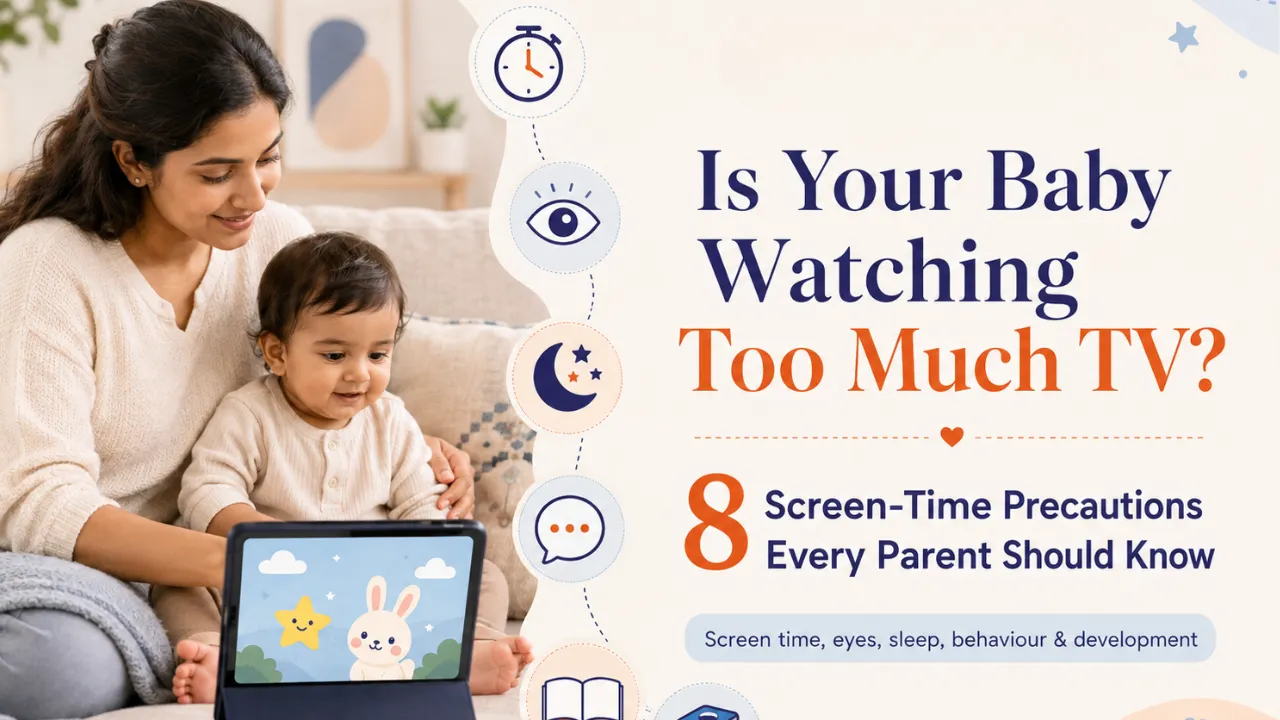
Is Your Baby Watching Too Much TV? 8 Screen-Time Precautions Every Parent Should Know
Cartoons can feel like the quickest way to calm a toddler or finish a chore. But age, content, timing and how the screen is used matter.
WHO recommends no sedentary screen time for infants under 1 year and for 1-year-olds. For 2-year-olds, screen time should be no more than 1 hour a day, with less being better.
Screen-time guide by age
| Age | Practical guidance |
|---|---|
| Under 1 year | WHO: sedentary screen time is not recommended. |
| 1 year | WHO: sedentary screen time is not recommended. |
| 2 years | WHO: no more than 1 hour/day; less is better. |
| 3-4 years | WHO: no more than 1 hour/day; less is better. |
| 18-24 months | AAP: prioritise high-quality content, caregiver involvement and real-world interaction. |
01 Be especially cautious with screens under age 2
The original FirstCry article advised no screen time for children under two. Current guidance is more nuanced, but the main point remains: very young children learn best from people and real-world experiences.
02 Monitor cartoons for violence, fear and stereotypes
Do not assume that animated automatically means child-safe. Preview shows when possible and look for frightening scenes, aggressive behaviour, unsafe imitation, stereotypes or language your child is not ready to process.
Before pressing play, ask:
- Is this made for my child's age?
- Does it model behaviour I am comfortable with?
- Is it very fast, loud or frightening?
- Can I explain what is happening?
- Would I be comfortable with my child copying it?
03 Help toddlers understand fantasy vs reality
Young children may not always understand that cartoon characters, monsters or impossible actions are fictional. If a scene scares or confuses your child, explain in simple language that it is a story.
04 Protect your child's eyes with breaks and better viewing habits
Long periods of close screen viewing can contribute to tired, dry or uncomfortable eyes. Encourage regular breaks, blinking, adequate room lighting and a comfortable viewing distance.
Do not focus only on “blue light.” The bigger everyday issues are long viewing sessions, close viewing, fewer breaks, less outdoor time and screens displacing sleep.
05 Prevent screen dependence before every transition becomes a battle
Many parents search for baby addicted to TV, toddler addicted to screen or child cries when screen is taken away. Create a predictable start and finish, turn off autoplay and move straight to another activity.
How to reduce screen time without constant tantrums
Try this routine
- Set the limit before the screen starts.
- Use one episode rather than endless autoplay.
- Give a 5-minute and 1-minute warning.
- Offer the next activity before switching off.
- Keep the device out of sight afterwards.
- Stay consistent.
06 Watch cartoons with your child when possible
The original article recommends watching together rather than using TV only as a babysitter. This remains useful advice because caregiver involvement helps connect on-screen words and ideas to real life.
07 Monitor commercials, autoplay and recommended videos too
Ads, autoplay and algorithmic recommendations can expose children to food marketing, frightening thumbnails, inappropriate language or simply much more screen time than you intended.
08 Keep cartoons out of bedtime, bedroom and mealtimes
The AAP advises keeping devices out of bedrooms and stopping screens about 30-60 minutes before bedtime. Media-free meals are also encouraged because screens can distract from hunger and fullness cues and reduce family conversation.
If a toddler can eat only when a phone or cartoon is running, start reducing that association gradually. Move toward meals at the table with conversation and no device in direct view.
Can screen time cause speech delay?
Heavy solo screen use can be associated with poorer language and social outcomes when it replaces interaction with caregivers. That does not mean every child who watches cartoons will develop a speech delay. If you are concerned about communication milestones, speak with your paediatrician.
Signs your family's screen routine may need a reset
| What you notice | What to try |
|---|---|
| Child asks for screen immediately after waking | Create a screen-free morning routine. |
| Meltdown whenever the device turns off | Use warnings, fixed end points and replacement activities. |
| Screen needed at every meal | Start with one media-free meal a day. |
| Cartoons continue into bedtime | Stop screens 30-60 minutes before sleep. |
| Child watches alone for long stretches | Shorten sessions and co-view when possible. |
| Less outdoor or physical play | Schedule active play before screen time. |
What can parents offer instead of TV?
Talking, singing, picture books, stacking cups, puzzles, sensory play, music, dancing, outdoor walks and safe household participation are simple alternatives. WHO specifically encourages reading, storytelling and singing during sedentary time.
Frequently asked questions
When the screen goes off, make the next activity easy to say yes to: comfortable clothes, floor play, dancing, blocks or a short outdoor walk.
This article is for general parenting information and does not replace medical or developmental advice. If you are concerned about your child's speech, sleep, behaviour, vision or development, speak with your paediatrician or an appropriate specialist.
Less scrolling. More moving, talking & playing.
Young children learn through real-world movement and interaction. Keep screen routines simple, predictable and balanced with everyday play.
Explore Comfortable Toddler Wear