
Monsoon Baby Care: A Parent's Guide to the Rainy Season
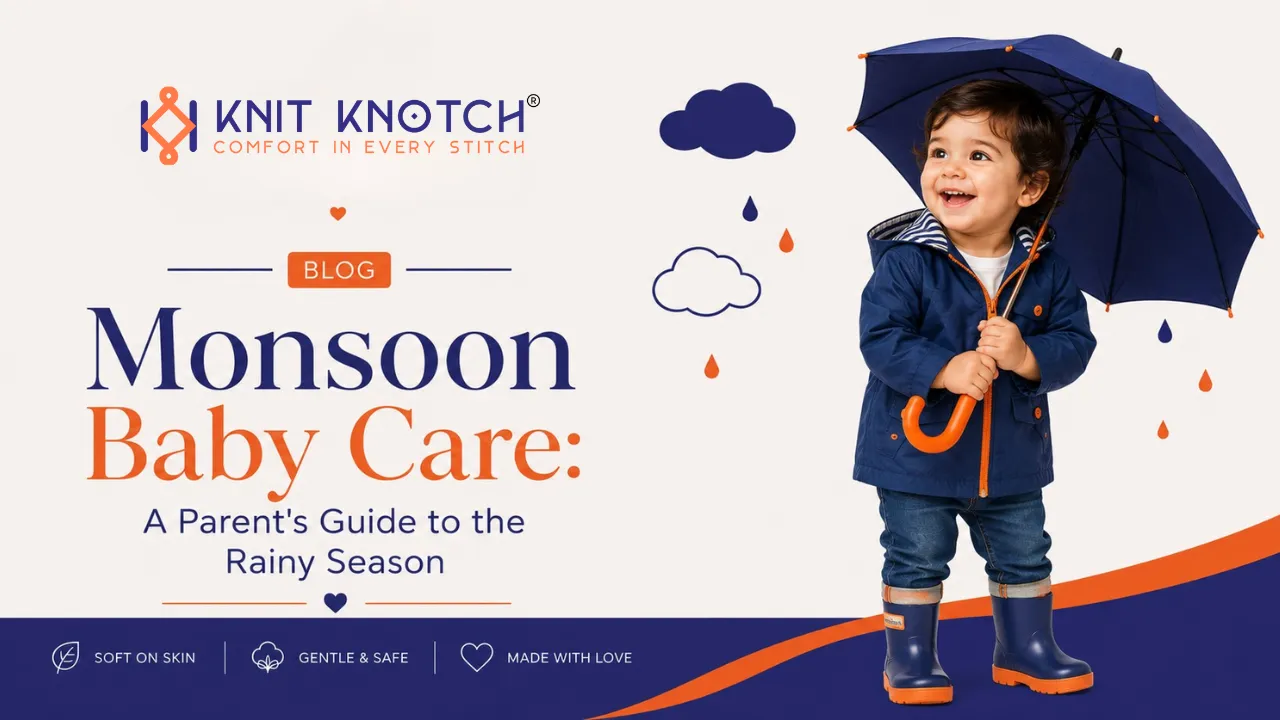
A Parent's Guide to the Rainy Season Monsoon baby care made simple: keep your baby's skin dry, prevent rainy-season rashes, choose quick-dry cotton clothes, and know the health signs to watch for through the Indian monsoon.
Monsoon Baby Care: A Parent's Guide to the Rainy Season
The monsoon is a relief from the heat — and a new set of challenges for a baby's skin and health. Here's how to keep your little one dry, comfortable and well through the rains.
01 Why the monsoon needs a different routine
The challenge of the rainy season isn't the rain itself — it's the humidity. When the air is heavy with moisture, sweat can't evaporate off the skin, so it lingers in the folds at the neck, underarms and thighs. That trapped dampness is the root cause of most monsoon skin problems, from heat rash to fungal irritation.
So the entire goal of monsoon baby care can be summed up in one word: dry. Keep the skin dry, keep the clothes dry, and you've prevented the majority of issues before they start.
02 Keeping your baby's skin dry and healthy
Skin folds are the trouble spots. After every bath, pat — don't rub — your baby completely dry, paying special attention to the neck, underarms, wrists and thigh creases. A clean, dry fold won't develop a rash; a damp one often will.
Bathe with lukewarm water and a gentle cleanser, and don't over-bathe. If your baby sweats through the day, a quick wipe-down and a change of clothes does more good than an extra bath.
Check the skin folds at every nappy change during the monsoon. If a fold feels damp, dry it and change into fresh clothes. Dryness is the single best defence against rainy-season rashes.
03 What to dress your baby in
Clothing does a lot of the heavy lifting in the monsoon. Choose light, breathable cotton that dries quickly, and steer clear of thick or synthetic fabrics that stay damp for hours and trap moisture against the skin. The faster a fabric breathes and dries, the better it protects your baby.
Change clothes the moment they get damp — whether from rain, sweat or a spill — and always keep a dry spare set within reach when you're out. Loose, airy fits help air circulate; tight clothing seals moisture in.
"In the monsoon, dry cotton on the skin is worth more than any cream. The fabric you choose is your first line of defence."
04 Hygiene and feeding in the rains
The monsoon raises the risk of water-borne and stomach infections, so hygiene matters more than usual. Wash your hands before handling your baby, keep feeding bottles and toys clean, and for older babies on water and solids, use clean, safe drinking water and freshly prepared food.
For breastfed babies, keep up regular feeds — breast milk supports immunity, which is a real advantage during infection-prone months.
05 Mosquitoes and the damp indoors
Standing water means more mosquitoes, and babies need protection. Use baby-safe mosquito nets over cribs and prams, dress your baby in light full-sleeve cotton in the evenings, and keep your surroundings free of stagnant water. Indoors, a little air circulation from a fan helps keep bedding and the room from feeling damp.
Monsoon baby-care checklist
- Keep skin folds dry — pat dry after baths and check at every nappy change.
- Dress in quick-dry cotton — light, breathable, and changed the moment it's damp.
- Carry a dry spare set whenever you step out.
- Stay on top of hygiene — clean hands, bottles, toys and safe water.
- Use mosquito protection — nets and light full-sleeve evening wear.
- Keep up vaccinations and regular feeds to support immunity.
06 When to see a doctor
Most monsoon niggles are minor and manageable at home. But some signs need a paediatrician's attention.
Check with your doctor if your baby has:
- A fever that persists or keeps returning
- A rash that worsens or shows signs of infection — pus, swelling or warmth
- Diarrhoea or vomiting, or signs of dehydration like fewer wet nappies
- Difficulty breathing, a persistent cough, or unusual drowsiness
07 Frequently asked questions
This article is general parenting information, not medical advice. KnitKnotch is a children's clothing brand, not a medical provider. If you're worried about your child's health, please speak to a qualified paediatrician.
Dry, comfortable and rain-ready
KnitKnotch makes light, breathable cotton co-ord sets, shorts sets and everyday wear for boys, girls and toddlers — quick to dry and gentle on the skin through the Indian monsoon, most of it under Rs500.
Shop the Collection