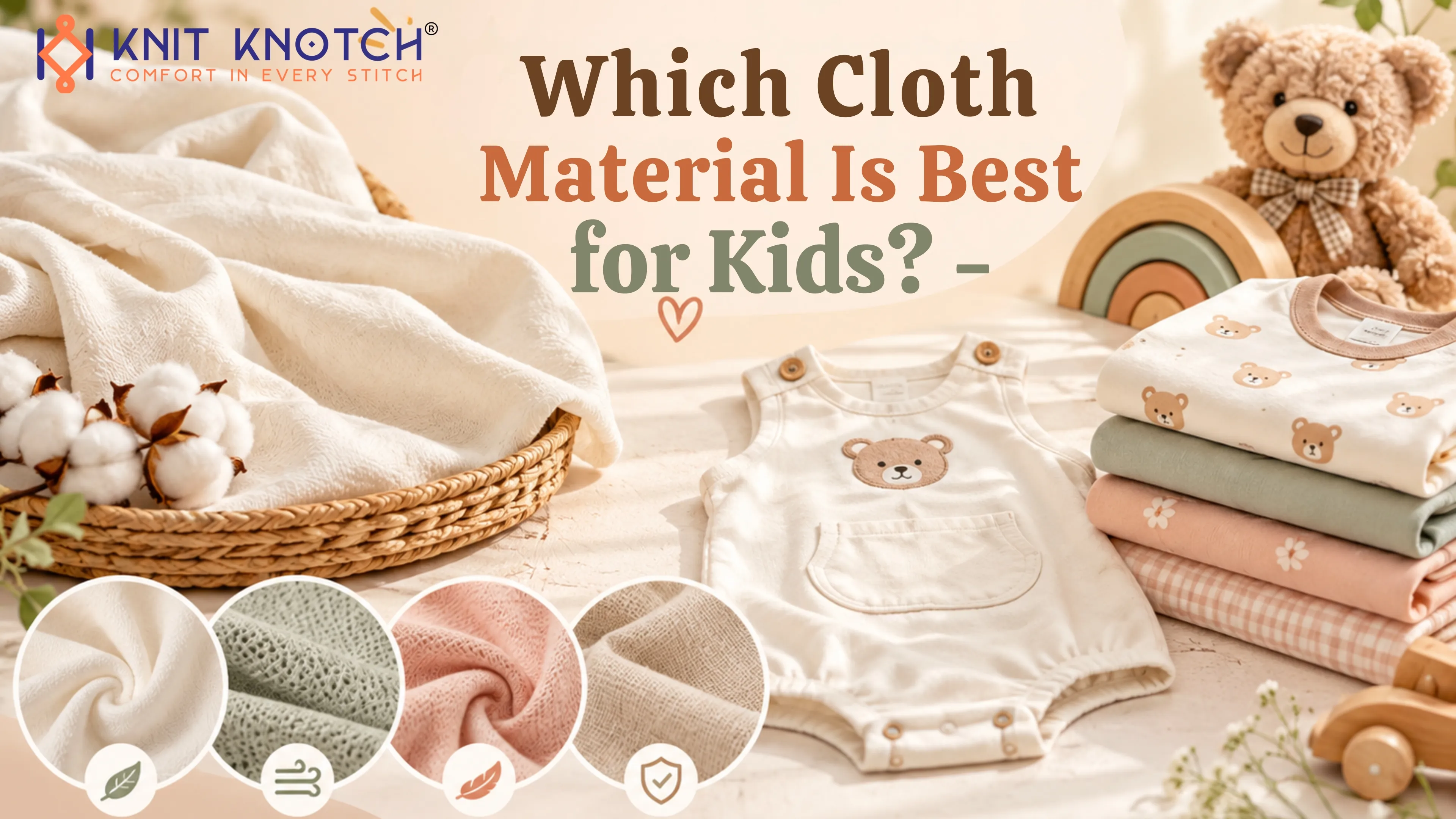
Which Cloth Material Is Best for Kids?
Which cloth material is best for kids? Cotton, linen, bamboo, polyester, rayon -- we compare every common fabric on comfort, breathability, durability and safety so you know what to pick for your child. Sections: 12 numbered (what makes fabric good, full comparison table, cotton, muslin/organic cotton, linen, bamboo, polyester, nylon, rayon, wool, blends, quick guide)
Which Cloth Material Is Best for Kids?
Cotton, linen, bamboo, polyester, rayon, nylon, wool. There's a lot of fabric out there and most of it doesn't tell you how it'll actually feel on a child. Here's a straight comparison so you know what to pick and what to skip.
01 What makes a fabric good for kids
Before comparing individual materials, it helps to know what you're measuring them against. A good kids' fabric needs to do four things: feel soft against young skin, breathe so heat and sweat escape, last through constant washing and rough play, and be safe, meaning free from anything likely to irritate. Every fabric below gets judged on those four.
02 The full fabric comparison
Here's how the common kids' clothing fabrics stack up, honestly. No fabric is perfect for every situation, but some are clearly better everyday choices than others.
| Fabric | Softness | Breathability | Durability | Best for |
|---|---|---|---|---|
| Cotton | Excellent | Excellent | Very good | Everyday wear, all seasons |
| Muslin cotton | Very soft | Excellent | Moderate | Swaddles, summer layers |
| Organic cotton | Excellent | Excellent | Very good | Sensitive or reactive skin |
| Linen | Moderate (stiff at first) | Excellent | Good | Summer wear for older kids |
| Bamboo | Very soft | Very good | Moderate | Sleepwear, layering |
| Polyester | Variable | Poor | Very good | Sportswear only, not everyday |
| Nylon | Smooth but synthetic | Poor | Very good | Rainwear, outer shells |
| Rayon / Viscose | Soft | Moderate | Low | Occasional wear, light dresses |
| Wool | Varies (can itch) | Moderate | Good | Winter layering (not against skin) |
03 Cotton: the everyday winner
Cotton leads the table for a reason, and it's the same reason your grandmother would have given: it breathes, it's soft, it washes well, and it works year-round. For a child in Indian weather, those things matter more than anything a newer fabric promises.
Cotton absorbs sweat and lets it evaporate rather than trapping it against the skin, which is exactly why it prevents the rashes and prickly heat that synthetic fabrics encourage. It gets softer with every wash instead of stiffer, and good-quality cotton holds its shape through the kind of daily beating kids' clothes take. For a deeper look at why cotton keeps winning, our why cotton is still the best choice for kids goes into it thoroughly.
When buying, look for 100% cotton or 95%+ cotton on the fabric label. A little elastane (2-5%) for stretch is fine. Once polyester climbs above 10-15%, breathability drops noticeably. Every garment sold in India is legally required to carry a composition label, so read it.
04 Muslin and organic cotton
Muslin is a loose, open-weave cotton that's extra light and airy. It's lovely for swaddles, summer layers, and light blankets. It feels beautiful but wears out faster than a tighter cotton weave, so it's better suited to accessories and layering than hard-wearing daily outfits.
Organic cotton is grown with fewer chemicals, which means less residue against a baby's skin. It feels and performs like regular cotton but with an added gentleness for very reactive or eczema-prone skin. If your child has sensitive skin, our fabric guide for sensitive baby skin goes deeper on which variants work best.
05 Linen: breathable but rough
Linen is extremely breathable, which makes it theoretically excellent for hot weather. The catch with kids is that linen starts stiff, wrinkles within minutes, and can feel rough against young skin until it's been washed many times. For older children who don't mind the texture, a linen-cotton blend shirt or shorts set can work well in summer. For babies and toddlers, stick with cotton.
06 Bamboo: soft, with caveats
Bamboo fabric is genuinely very soft and wicks moisture well, which makes it popular for baby sleepwear and base layers. The caveats are durability (it tends to be less robust than cotton under heavy washing) and the fact that most "bamboo" fabric is actually bamboo viscose, which goes through significant chemical processing. It's a good option for gentle-wear items, but cotton still has the edge for everyday durability and easy care.
07 Polyester: good for sport, bad for everything else
Polyester is durable, cheap to produce, and holds colour well, which is why so much kids' clothing is made from it. The problem is simple: it doesn't breathe. It traps heat and moisture against the skin, which means sweat, discomfort, and rashes, especially in Indian humidity. For sportswear designed to wick moisture during activity, performance polyester has a purpose. For everyday wear, sleeping, or anything worn against the skin for hours, cotton is a far better choice.
Our detailed cotton vs synthetic comparison breaks down exactly where each one wins and loses.
"Polyester looks great in the listing photo. Cotton feels great on the child. When in doubt, read the label, not the picture."
08 Nylon: outer layers only
Nylon is strong, lightweight, and water-resistant, which makes it suitable for raincoats, windbreakers, and outer shells. Against the skin, it behaves like polyester: traps heat and moisture. So use it where its strengths matter (the monsoon raincoat) and keep it away from the layers touching your child's body. For monsoon dressing that balances style and function, our monsoon outfit guide covers what works.
09 Rayon and viscose: handle with care
Rayon (including viscose and modal) feels soft and drapes beautifully, which is why it appears in light dresses and occasion wear. The downside: it's delicate, shrinks easily, loses shape when wet, and doesn't hold up to the kind of frequent washing kids' clothes need. It's fine for an occasional outfit, but it's not an everyday fabric and it's not one to build a wardrobe on.
10 Wool: warm but not against the skin
Wool is warm and naturally temperature-regulating, which makes it useful in cold weather. The issue for kids is that many wools feel scratchy and can irritate young skin. The solution is layering: a cotton base layer against the skin, and a woollen layer on top for warmth. Merino wool is softer and less itchy, but it's also more expensive and needs gentle care.
11 What about blends?
Blends are not the enemy. A cotton-elastane mix (95/5 or similar) adds useful stretch without losing breathability. A cotton-linen mix softens the linen while keeping the airiness. The thing to watch is how much synthetic is in the blend. Once polyester rises above about 15%, the fabric stops breathing properly and starts behaving like synthetic, no matter what the primary fibre is. Always check the percentage on the label.
12 The quick guide
Which fabric, when
- Everyday wear (all seasons): 100% cotton or 95%+ cotton. The default.
- Summer: lightweight cotton, muslin cotton, or a cotton-linen blend.
- Monsoon: quick-dry cotton for clothes, nylon for the outer raincoat.
- Winter: cotton base layer against the skin, wool or fleece on top.
- Sleepwear: soft cotton or bamboo.
- Sensitive skin: organic cotton or soft 100% cotton.
- Sport and active play: performance polyester or cotton-poly blend designed for moisture-wicking.
For judging the build quality of a garment alongside the fabric, our dress quality guide covers how to check GSM, stitching and construction. And India's Bureau of Indian Standards (BIS) sets the textile labelling requirements that make fabric composition legally visible on every garment sold in the country.
Frequently asked questions
Cotton, done properly
KnitKnotch makes soft, breathable cotton co-ord sets and everyday wear for boys, girls and toddlers, built for Indian weather and made to last through constant washing. Most of it under Rs500.
Shop the Collection