<!DOCTYPE html>
<html lang="en">
<head>
<meta charset="UTF-8"/>
<meta name="viewport" content="width=device-width, initial-scale=1.0"/>
<title>Toddler to Teen: How to Pick the Right Clothing Size</title>
<link href="https://fonts.googleapis.com/css2?family=Playfair+Display:ital,wght@0,400;0,700;1,400&family=DM+Sans:wght@300;400;500&display=swap" rel="stylesheet"/>
<style>
*,*::before,*::after{box-sizing:border-box;margin:0;padding:0}
body{font-family:'DM Sans',sans-serif;background:#fdf8f3;color:#2c2319;line-height:1.75}
.hero{background:#2c2319;color:#fdf8f3;padding:90px 60px 70px;position:relative;overflow:hidden}
.hero::before{content:'';position:absolute;top:-80px;right:-80px;width:400px;height:400px;border-radius:50%;background:#e8704a;opacity:.1}
.hero::after{content:'';position:absolute;bottom:-100px;left:8%;width:260px;height:260px;border-radius:50%;background:#f2c46d;opacity:.08}
.hero-inner{max-width:900px;margin:0 auto;position:relative;z-index:1}
.hero-tag{display:inline-block;font-size:11px;font-weight:500;letter-spacing:.14em;text-transform:uppercase;color:#f2c46d;border:1px solid rgba(242,196,109,.5);padding:5px 14px;border-radius:20px;margin-bottom:24px}
.hero h1{font-family:'Playfair Display',serif;font-size:clamp(34px,5vw,58px);line-height:1.15;max-width:700px;margin-bottom:22px;font-weight:700}
.hero h1 em{color:#e8704a;font-style:italic}
.hero-sub{font-size:16px;color:#b5a89a;max-width:520px;font-weight:300;margin-bottom:36px}
.hero-meta{display:flex;align-items:center;gap:20px;font-size:13px;color:#7a6e66;border-top:1px solid #3e3228;padding-top:22px;flex-wrap:wrap}
.hero-meta span{color:#b5a89a}
.content-wrap{max-width:800px;margin:0 auto;padding:72px 40px 100px}
@media(max-width:600px){.hero{padding:60px 28px 52px}.content-wrap{padding:48px 24px 72px}}
.intro-block{font-size:18px;color:#4a3e36;border-left:3px solid #e8704a;padding-left:22px;margin-bottom:56px;font-weight:300;font-style:italic;line-height:1.8}
h2{font-family:'Playfair Display',serif;font-size:28px;font-weight:700;color:#2c2319;margin:56px 0 18px;line-height:1.25}
h3{font-size:11px;font-weight:500;text-transform:uppercase;letter-spacing:.1em;color:#e8704a;margin:32px 0 12px}
p{font-size:16px;color:#4a3e36;margin-bottom:20px;font-weight:300}
.age-grid{display:grid;grid-template-columns:repeat(4,1fr);gap:16px;margin:28px 0 40px}
@media(max-width:700px){.age-grid{grid-template-columns:repeat(2,1fr)}}
@media(max-width:420px){.age-grid{grid-template-columns:1fr}}
.age-card{background:#fff;border:1px solid #e8e0d8;border-radius:12px;padding:22px 18px;position:relative;overflow:hidden}
.age-card::before{content:'';position:absolute;top:0;left:0;right:0;height:4px}
.age-card.c1::before{background:#e8704a}.age-card.c2::before{background:#f2c46d}.age-card.c3::before{background:#7ab8a4}.age-card.c4::before{background:#a78bce}
.age-label{font-size:10px;font-weight:500;letter-spacing:.13em;text-transform:uppercase;margin-bottom:6px}
.age-card.c1 .age-label{color:#e8704a}.age-card.c2 .age-label{color:#c98f10}.age-card.c3 .age-label{color:#3b7a67}.age-card.c4 .age-label{color:#6a47b0}
.age-range{font-family:'Playfair Display',serif;font-size:22px;font-weight:700;color:#2c2319;margin-bottom:8px}
.age-size{font-size:13px;color:#7a6e66;font-weight:300;line-height:1.55}
.age-size strong{color:#2c2319;font-weight:500}
.tip-box{background:#fff7ef;border:1px solid #f5d9c4;border-radius:12px;padding:26px 30px;margin:32px 0}
.tip-box-title{font-size:10px;font-weight:500;letter-spacing:.15em;text-transform:uppercase;color:#e8704a;margin-bottom:12px}
.tip-box p{margin:0;font-size:15px;color:#5a4435}
.checklist{list-style:none;margin:18px 0 30px;display:flex;flex-direction:column;gap:11px}
.checklist li{display:flex;align-items:flex-start;gap:13px;font-size:15.5px;color:#4a3e36;font-weight:300;line-height:1.6}
.check-dot{width:21px;height:21px;min-width:21px;border-radius:50%;background:#e8704a;display:flex;align-items:center;justify-content:center;margin-top:2px}
.check-dot::after{content:'';color:#fff;font-size:11px;font-weight:700}
.size-table-wrap{overflow-x:auto;margin:26px 0 40px;border-radius:12px;border:1px solid #e8e0d8}
table{width:100%;border-collapse:collapse;font-size:14px;background:#fff;min-width:440px}
thead tr{background:#2c2319}
thead th{padding:13px 18px;color:rgba(255,255,255,.85);font-weight:500;text-align:left;font-size:11px;letter-spacing:.07em;text-transform:uppercase}
tbody tr:nth-child(even){background:#fdf8f3}tbody tr:nth-child(odd){background:#fff}
tbody td{padding:12px 18px;color:#4a3e36;border-bottom:1px solid #ede7e0;font-weight:300}
tbody td:first-child{font-weight:500;color:#2c2319}
tbody tr:last-child td{border-bottom:none}
.highlight-strip{background:#2c2319;color:#fdf8f3;border-radius:12px;padding:30px 34px;margin:44px 0}
.highlight-strip h3{color:#f2c46d;margin-top:0}
.highlight-strip p{color:#b5a89a;font-size:15px;margin:0}
.two-col{display:grid;grid-template-columns:1fr 1fr;gap:18px;margin:22px 0 36px}
@media(max-width:540px){.two-col{grid-template-columns:1fr}}
.mini-card{background:#fff;border:1px solid #e8e0d8;border-radius:10px;padding:20px}
.mini-card-title{font-size:14px;font-weight:500;color:#2c2319;margin-bottom:8px}
.mini-card p{font-size:14px;color:#7a6e66;margin:0}
.divider{border:none;border-top:1px solid #e8e0d8;margin:48px 0}
.closing{background:linear-gradient(135deg,#e8704a 0%,#f2a96d 100%);border-radius:16px;padding:44px 40px;margin-top:56px;color:#fff}
.closing h2{font-family:'Playfair Display',serif;color:#fff;margin-top:0;font-size:28px}
.closing p{color:rgba(255,255,255,.88);font-size:16px;margin:0}
</style>
</head>
<body>
<div class="hero">
<div class="hero-inner">
<div class="hero-tag">Parenting Guide</div>
<h1>Toddler to Teen:<br/><em>How to Pick the Right</em><br/>Clothing Size for Your Growing Child</h1>
<p class="hero-sub">A practical, stage-by-stage guide to shopping smarter — and stressing less — as your child grows.</p>
<div class="hero-meta">
<span>10 min read</span><span>·</span><span>Ages 1–16</span><span>·</span><span>Sizing · Growth · Tips</span>
</div>
</div>
</div>
<div class="content-wrap">
<p class="intro-block">Every parent knows the feeling: you buy a perfectly lovely outfit, your child wears it once, and by next month it's two sizes too small. Getting clothing sizes right isn't just about saving money — it's about keeping your child comfortable, confident, and ready to move.</p>
<h2>Why Kids' Sizing Is So Confusing</h2>
<p>Children's clothing sizing has no universal standard. A "4T" from one brand can fit completely differently from a "4T" in another. Sizes are based on a mix of age, height, and weight — and since no two children grow at the same pace, the labels are always just a starting point.</p>
<p>The key is to understand what each sizing "era" means, measure your child regularly, and know a few insider tricks for each stage.</p>
<hr class="divider"/>
<h2>Stage-by-Stage Sizing Guide</h2>
<p>Children's clothing is typically divided into four broad phases. Here's what you need to know about each.</p>
<div class="age-grid">
<div class="age-card c1"><div class="age-label">Stage 1</div><div class="age-range">Baby</div><div class="age-size">0–24 months<br/><strong>Sizes: NB, 0–3M, 3–6M, 6–9M, 9–12M, 18M, 24M</strong></div></div>
<div class="age-card c2"><div class="age-label">Stage 2</div><div class="age-range">Toddler</div><div class="age-size">2–5 years<br/><strong>Sizes: 2T, 3T, 4T, 5T</strong></div></div>
<div class="age-card c3"><div class="age-label">Stage 3</div><div class="age-range">Little Kid</div><div class="age-size">5–10 years<br/><strong>Sizes: 4, 5, 6, 7, 8, 10</strong></div></div>
<div class="age-card c4"><div class="age-label">Stage 4</div><div class="age-range">Big Kid / Tween</div><div class="age-size">10–16 years<br/><strong>Sizes: 10, 12, 14, 16 / XS–XL</strong></div></div>
</div>
<h3>Stage 1 — Baby (0–24 months)</h3>
<p>Babies grow fastest in their first year — some gain several inches in just a few months. Always size up when in doubt. A onesie that's slightly big won't hurt; one that's too tight at the snaps definitely will.</p>
<div class="tip-box"><div class="tip-box-title">Pro Tip</div><p>Skip the 0–3M size for gifts. Many newborns arrive larger than expected, or grow through that size before it's even unpacked. Stock up on 6–9M and 12M instead — they last longer and get more use.</p></div>
<ul class="checklist">
<li><span class="check-dot"></span>Check the weight range on the label, not just the months</li>
<li><span class="check-dot"></span>Look for snap closures that open wide at the bottom for diaper changes</li>
<li><span class="check-dot"></span>Buy fewer items per size — you'll outgrow them fast</li>
<li><span class="check-dot"></span>Soft, stretchy fabrics (cotton jersey) give more growing room</li>
</ul>
<h3>Stage 2 — Toddler (2T–5T)</h3>
<p>The "T" in toddler sizing stands for — you guessed it — toddler. These sizes are cut with extra room in the diaper area and a slightly shorter inseam. Once your child is potty trained, standard children's sizes (4, 5, 6) often fit just as well.</p>
<p>Toddlers grow in unpredictable spurts. A child in 3T in January may need 5T by summer. Buying a full season's wardrobe in advance is risky.</p>
<div class="tip-box"><div class="tip-box-title">Pro Tip</div><p>Buy the next size up at end-of-season sales. A 4T purchased in August clearance will be the perfect size for next summer — and cost a fraction of the price.</p></div>
<ul class="checklist">
<li><span class="check-dot"></span>Elastic waistbands with adjustable inside tabs are your best friend</li>
<li><span class="check-dot"></span>Leave 2–3 cm of growing room at hems and cuffs</li>
<li><span class="check-dot"></span>Avoid complicated fastenings — toddlers need to dress themselves</li>
<li><span class="check-dot"></span>Durable knees matter: toddlers live on the floor</li>
</ul>
<h3>Stage 3 — Little Kid (Sizes 4–10)</h3>
<p>This is where sizing gets less predictable. Children's body proportions shift considerably between ages 5 and 10 — some kids are tall and slim, others broader. Brands start to differ more noticeably here.</p>
<p>Many brands offer "slim" and "husky" (or "plus") cuts in addition to standard sizing. Don't hesitate to use them — fit matters more than what number is on the tag.</p>
<ul class="checklist">
<li><span class="check-dot"></span>Measure height and chest/waist before every shopping trip</li>
<li><span class="check-dot"></span>Check inseam length separately — it varies widely between brands</li>
<li><span class="check-dot"></span>This is a great age for adjustable waistband trousers</li>
<li><span class="check-dot"></span>Children begin forming style opinions — involve them in choices</li>
</ul>
<h3>Stage 4 — Big Kid / Tween (Sizes 10–16 / XS–XL)</h3>
<p>Tweens (roughly ages 10–14) are notoriously difficult to size for. Growth spurts are sudden and significant, and many children at this stage can fit both children's XL and adult XS. Girls' and boys' sizing also starts to diverge more sharply here.</p>
<p>Many brands now offer dedicated tween lines with more age-appropriate styling in this size range. It's worth seeking them out — teen bodies deserve cuts designed for them, not scaled-down adult silhouettes.</p>
<ul class="checklist">
<li><span class="check-dot"></span>Don't be surprised if your child skips a size entirely</li>
<li><span class="check-dot"></span>Try adult "XS/S" if children's sizing runs out</li>
<li><span class="check-dot"></span>Involve your child fully — they care deeply about fit and style now</li>
<li><span class="check-dot"></span>Expect to shop more frequently during growth spurts</li>
</ul>
<hr class="divider"/>
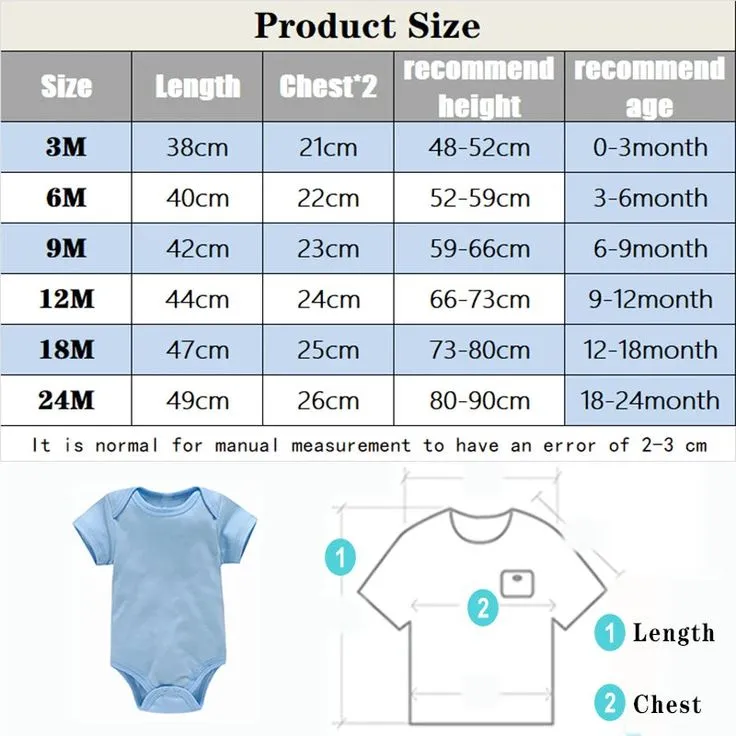
<h2>General Size Reference Chart</h2>
<p>Use this as a starting point. Always cross-reference with each brand's specific size guide.</p>
<div class="size-table-wrap">
<table>
<thead><tr><th>Size Label</th><th>Approx. Age</th><th>Height (cm)</th><th>Weight (kg)</th></tr></thead>
<tbody>
<tr><td>NB</td><td>Newborn</td><td>Up to 50 cm</td><td>Up to 3.6 kg</td></tr>
<tr><td>0–3M</td><td>0–3 months</td><td>50–60 cm</td><td>3.6–6.4 kg</td></tr>
<tr><td>6–9M</td><td>6–9 months</td><td>65–72 cm</td><td>7–9 kg</td></tr>
<tr><td>12M</td><td>9–12 months</td><td>72–78 cm</td><td>9–10.5 kg</td></tr>
<tr><td>18M</td><td>12–18 months</td><td>78–83 cm</td><td>10.5–12 kg</td></tr>
<tr><td>2T</td><td>2 years</td><td>83–89 cm</td><td>12–14 kg</td></tr>
<tr><td>3T</td><td>3 years</td><td>89–97 cm</td><td>14–16 kg</td></tr>
<tr><td>4T / 4</td><td>4 years</td><td>97–105 cm</td><td>16–18 kg</td></tr>
<tr><td>5T / 5</td><td>5 years</td><td>105–112 cm</td><td>18–20 kg</td></tr>
<tr><td>6</td><td>6 years</td><td>112–119 cm</td><td>20–23 kg</td></tr>
<tr><td>8</td><td>7–8 years</td><td>119–128 cm</td><td>23–27 kg</td></tr>
<tr><td>10</td><td>9–10 years</td><td>128–137 cm</td><td>27–33 kg</td></tr>
<tr><td>12</td><td>11–12 years</td><td>137–147 cm</td><td>33–41 kg</td></tr>
<tr><td>14</td><td>13–14 years</td><td>147–158 cm</td><td>41–52 kg</td></tr>
<tr><td>16</td><td>15–16 years</td><td>158–166 cm</td><td>52–62 kg</td></tr>
</tbody>
</table>
</div>
<hr class="divider"/>
<h2>How to Measure Your Child Correctly</h2>
<p>Measure your child every 3–4 months and record the numbers. Here's what to measure and how.</p>
<div class="two-col">
<div class="mini-card"><div class="mini-card-title">Height</div><p>Stand against a wall, barefoot. Mark the top of the head and measure from floor to mark. Morning measurements are most accurate.</p></div>
<div class="mini-card"><div class="mini-card-title">Chest</div><p>Measure around the fullest part of the chest, under the armpits. Keep the tape horizontal and snug but not tight.</p></div>
<div class="mini-card"><div class="mini-card-title">Waist</div><p>Measure at the natural waist — roughly 2–3 cm above the belly button. Take the measurement while relaxed, not sucking in.</p></div>
<div class="mini-card"><div class="mini-card-title">Inseam</div><p>Measure from the crotch seam to the ankle bone on the inside of the leg. Critical for getting trouser length right.</p></div>
</div>
<div class="highlight-strip">
<h3>The golden rule of buying ahead</h3>
<p>When buying seasonal clothes in advance — especially for fast growers — size up by one full size per season ahead. If your child wears a 6 in spring, buy an 8 for next spring. You'll be right more often than you're wrong.</p>
</div>
<hr class="divider"/>
<h2>Fabric Matters Too</h2>
<p>The right size in the wrong fabric can still feel terrible. Here are a few fabric considerations by age.</p>
<ul class="checklist">
<li><span class="check-dot"></span><strong>Babies:</strong> 100% cotton only. Soft, breathable, easy to wash at high temperature.</li>
<li><span class="check-dot"></span><strong>Toddlers:</strong> Stretch jersey and soft fleece allow free movement and survive rough play.</li>
<li><span class="check-dot"></span><strong>School age:</strong> Look for durable weaves (canvas, twill) for school days; save delicate fabrics for special occasions.</li>
<li><span class="check-dot"></span><strong>Tweens:</strong> Let them guide fabric preference — comfort and sensory sensitivities become more individual.</li>
</ul>
<hr class="divider"/>
<h2>Shopping Smart at Every Stage</h2>
<div class="two-col">
<div class="mini-card"><div class="mini-card-title">Buy multiples of basics</div><p>When you find jeans or school trousers that actually fit, buy two pairs in the current size and one in the next.</p></div>
<div class="mini-card"><div class="mini-card-title">End-of-season sales</div><p>The best time to buy next year's coat is in April. Shop clearance with a size chart in hand.</p></div>
<div class="mini-card"><div class="mini-card-title">Hem allowances</div><p>Buy trousers slightly long and keep the hem down. Let it out as needed — you can gain 3–6 months of extra wear.</p></div>
<div class="mini-card"><div class="mini-card-title">Check brand-specific guides</div><p>Never rely on the label alone. H&M, Zara, and Gap all size differently. Always check the brand's own chart online.</p></div>
<div class="mini-card"><div class="mini-card-title">Keep a sizing journal</div><p>A quick note in your phone — height, waist, inseam, favourite brands — saves enormous hassle when shopping online.</p></div>
<div class="mini-card"><div class="mini-card-title">The thumb rule for shoes</div><p>Always buy shoes with a thumb's width of space at the toe. Children's feet grow half a size every 2–3 months under age 5.</p></div>
</div>
<div class="closing">
<h2>The Bottom Line</h2>
<p>No chart, label, or blog post knows your child better than you do. Use size guides as a starting point, measure regularly, and trust what you see. A comfortable child in clothes that fit well — whatever the number inside — is always the goal. Happy shopping.</p>
</div>
</div>
</body>
</html>